Essential Tips to Preserve and Restore Coral Reefs in Phu Quoc
03/12/2025Phu Quoc is home to some of the most diverse and beautiful coral reef ecosystems in Vietnam, especially around the An Thoi archipelago and Ganh Dau. However, as tourism grows rapidly, many coral areas have been impacted by human activities, boats, and environmental changes.
Protecting and restoring coral reefs is not only the responsibility of conservation organizations but also of each traveler and every local business. This guide will help you understand what coral reefs need and how we can all contribute to preserving this precious ecosystem.
Why are Phu Quoc’s coral reefs so important?
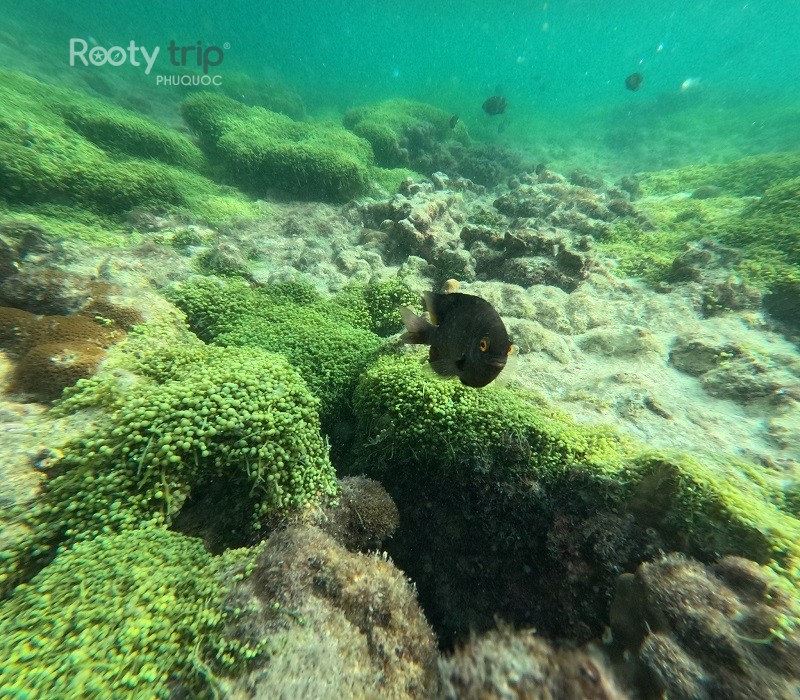
Coral reefs play an essential role in maintaining a healthy marine environment:
- They provide shelter for hundreds of marine species such as fish, sea stars, sea cucumbers, and anemones.
- They act as natural breakwaters, reducing coastal erosion.
- They support local fishing communities and marine tourism.
- They help maintain clear, vibrant water and overall biodiversity.
However, even a single touch or step can damage or kill coral structures.
What can travelers do to protect coral reefs?
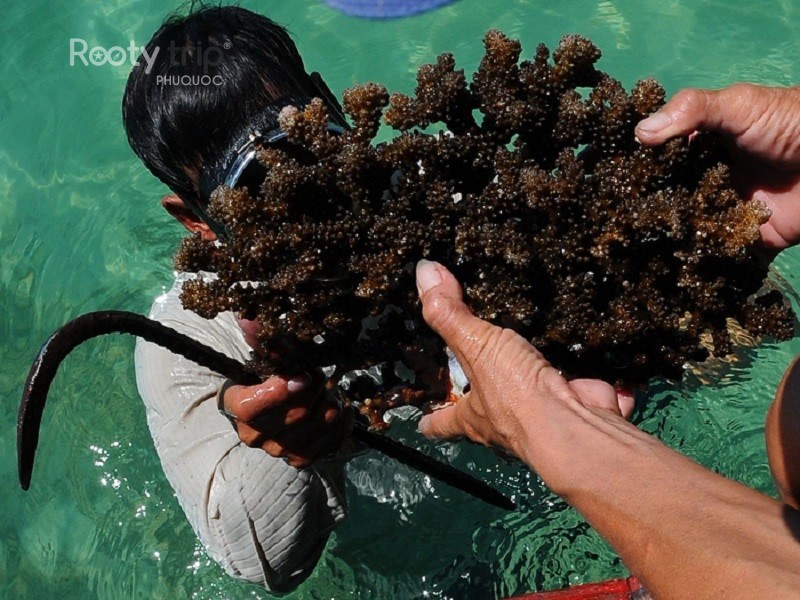
- Do not stand or step on coral: Coral is extremely fragile-just a small impact can break an entire branch.
- Avoid touching coral with your hands or fins: The oils and bacteria on human skin can harm coral tissue.
- Do not pick up dead coral as souvenirs: Even dead coral still provides habitat for small marine creatures.
- Use reef-safe sunscreen: Chemicals like oxybenzone and octinoxate can bleach coral. Choose sunscreens labeled reef-safe.
- Do not litter in the ocean: Plastic waste is one of the biggest threats to marine life and coral health.
- Follow your guide’s instructions during snorkeling: This helps ensure both your safety and the protection of the reef.
Coral conservation efforts currently taking place in Phu Quoc
Phu Quoc has begun applying several modern coral restoration techniques:
Coral Nursery (Coral Propagation)

- Healthy coral fragments are collected
- Attached to nursery frames underwater
- Monitored for 6–12 months before being transplanted back to natural reefs
This allows damaged reefs to recover more quickly.
Coral Transplantation
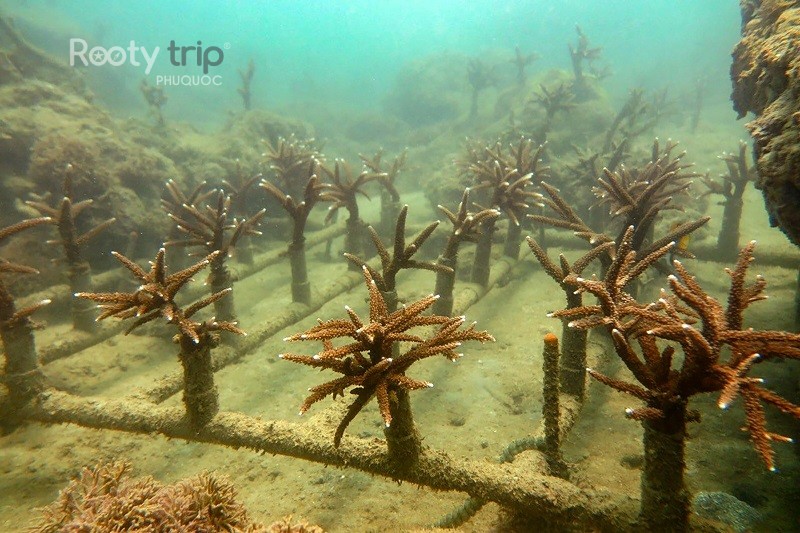
Coral fragments are fixed onto degraded reef areas using marine-safe adhesives or frames.
This method revitalizes zones damaged by storms, anchors, and unintentional human contact.
Regulating boats and snorkeling sites
Popular spots like Hon Gam Ghi and Hon Mong Tay now use permanent mooring buoys, preventing anchors from destroying coral.
Dive Against Debris campaigns
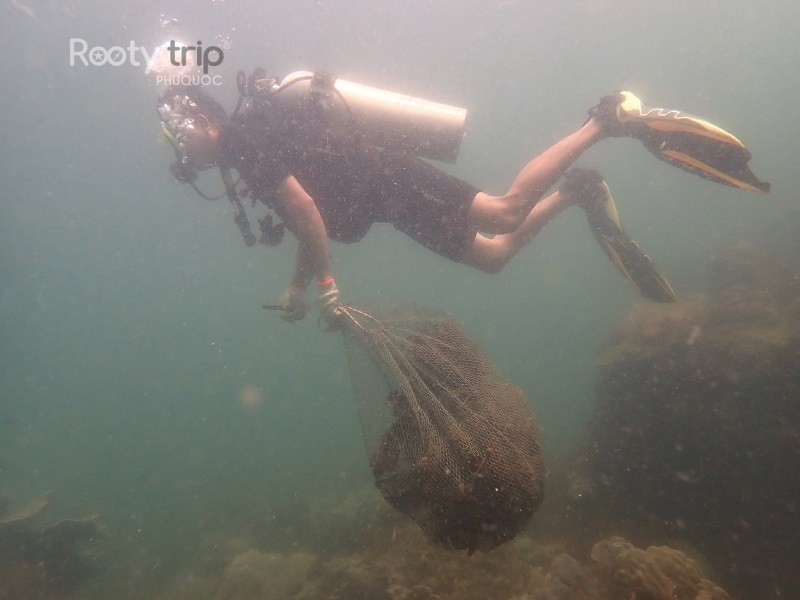
Local groups and tour companies conduct weekly underwater clean-ups, removing plastic and harmful waste.
What local tour operators can do to help
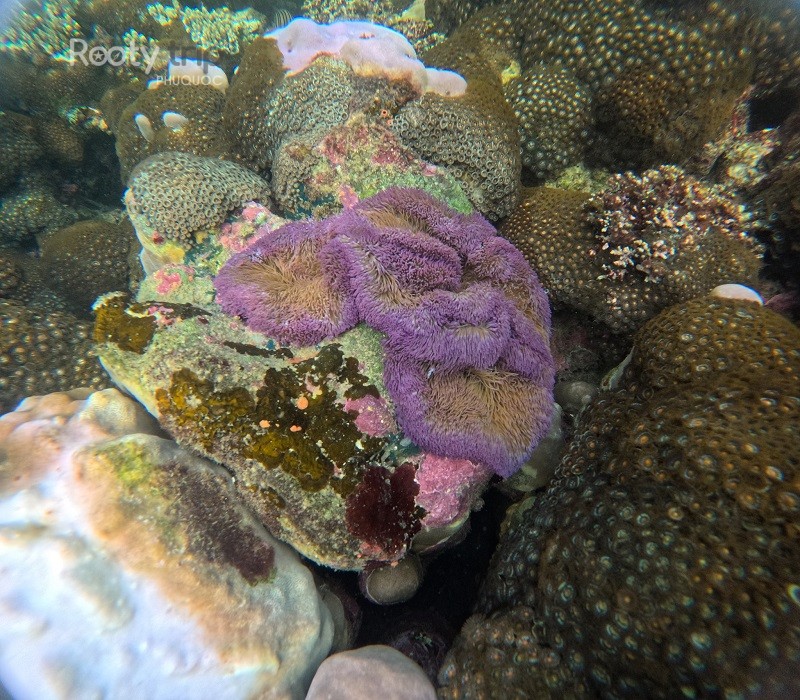
Companies like Rooty Trip can play a huge role in protecting the coral ecosystem by:
- Training tour guides in marine conservation
- Reminding guests to use reef-safe sunscreen
- Limiting visitor numbers at sensitive snorkeling sites
- Providing environmental awareness briefings before each tour
- Funding or supporting coral restoration projects
These actions help create a sustainable tourism model for Phu Quoc.
The future of Phu Quoc’s coral reefs depends on all of us
Coral takes decades to grow but can be destroyed in just a few seconds.
If every traveler, guide, and business takes responsibility, Phu Quoc’s coral reefs can fully recover and flourish again.
This is how we can keep Phu Quoc beautiful-not just for today, but for generations to come.