Sea Turtles in Phu Quoc A Rare and Fragile Presence
22/12/2025Phu Quoc is not only famous for its crystal-clear beaches and rich marine ecosystems, but it has also been one of the rare places in Vietnam where sea turtles have been recorded. These ancient and endangered creatures play a vital role in ocean ecosystems. However, today, the presence of sea turtles in Phu Quoc has become extremely fragile, raising important concerns about conservation and sustainable tourism.
Sea Turtle Species in Vietnam
Vietnam is one of the few countries in the world where 5 out of the 7 global sea turtle species have been recorded. Unfortunately, all of them are currently classified as endangered or critically endangered and are strictly protected.
The sea turtle species found in Vietnam include:
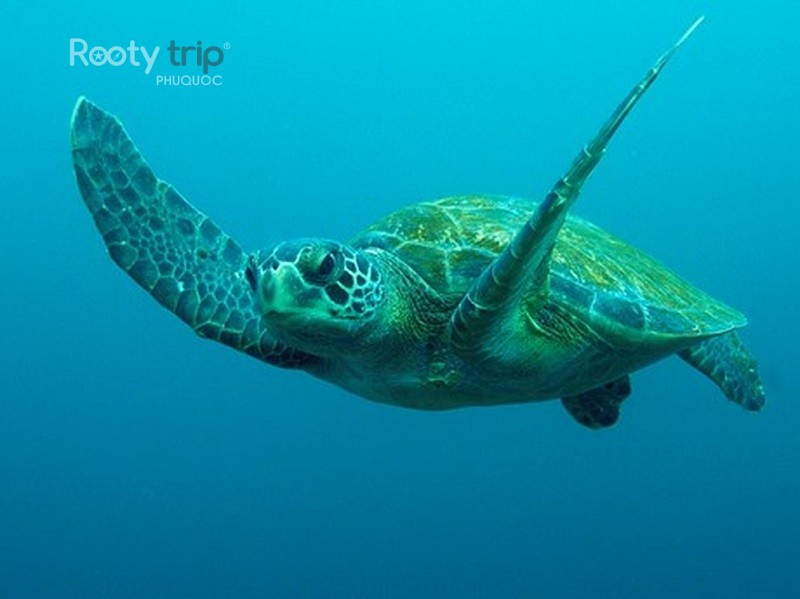
Green Turtle (Chelonia mydas) – the most common species, usually found in seagrass meadows.
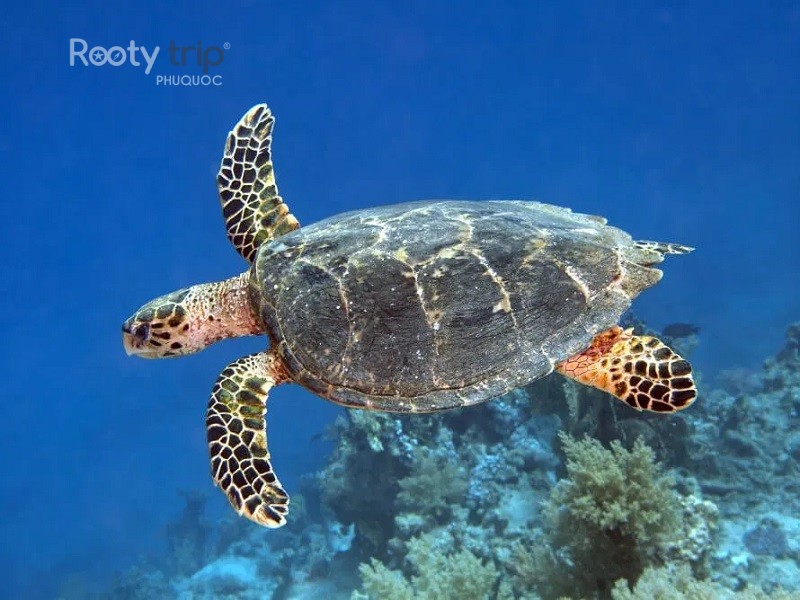
- Hawksbill Turtle (Eretmochelys imbricata) – closely associated with coral reefs and listed as critically endangered.
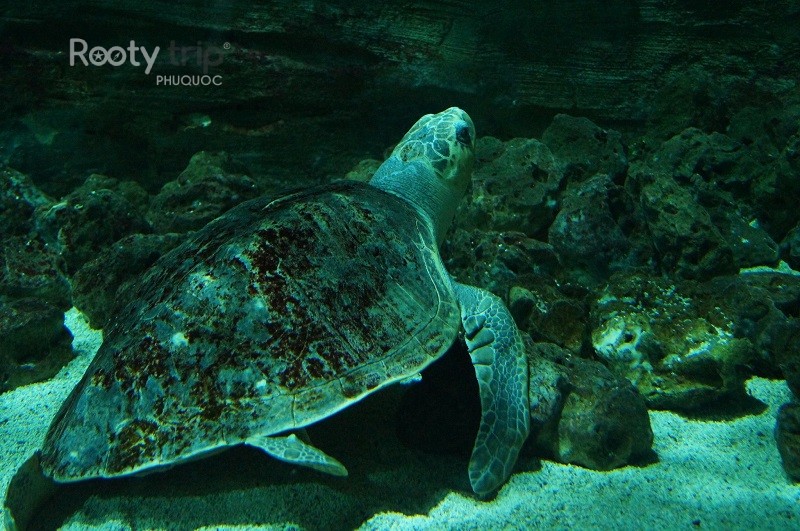
- Olive Ridley Turtle (Lepidochelys olivacea) – rarely seen, mainly in some central coastal areas.
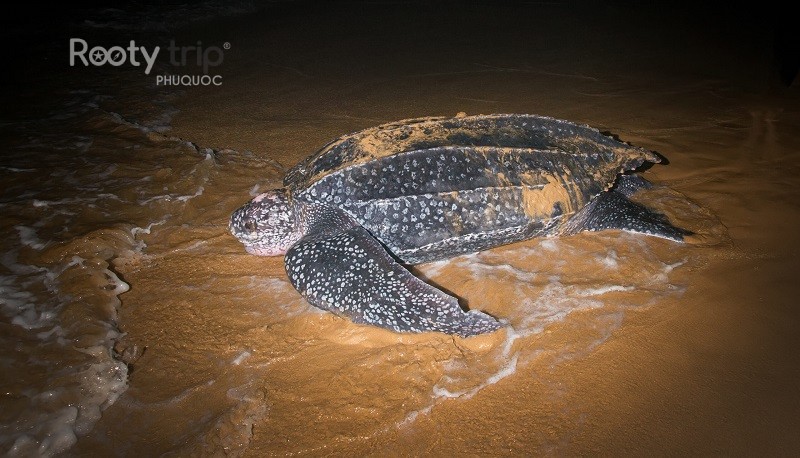
- Leatherback Turtle (Dermochelys coriacea) – the largest sea turtle in the world, now extremely rare in Vietnam.
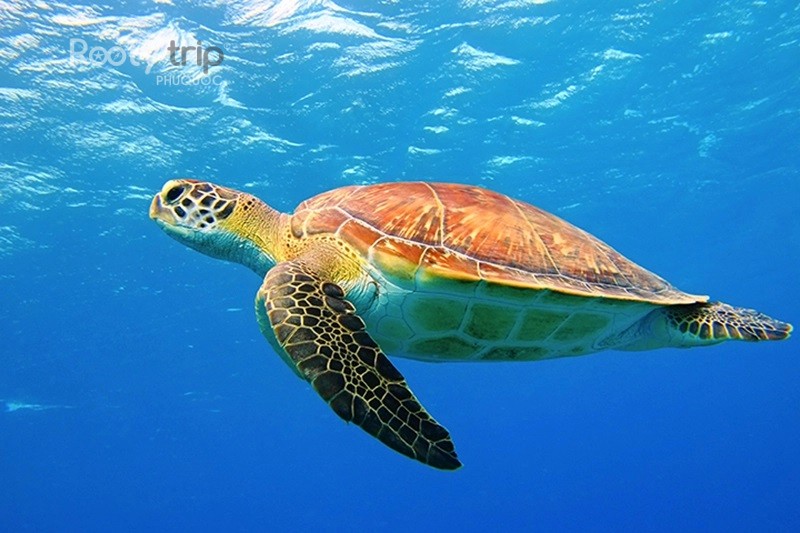
- Loggerhead Turtle (Caretta caretta) – recorded only in very small numbers.
The presence of sea turtles is an important indicator of the overall health of marine ecosystems.
Areas Where Sea Turtles Still Live in Vietnam
Today, sea turtles in Vietnam only remain and reproduce in a few relatively undisturbed marine areas, such as:
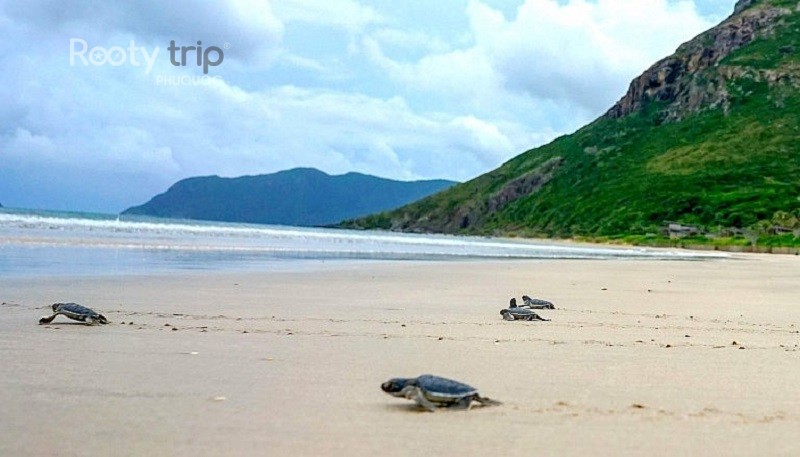
- Con Dao Islands (Ba Ria – Vung Tau) – the most important sea turtle conservation area in Vietnam, with regular nesting activity.
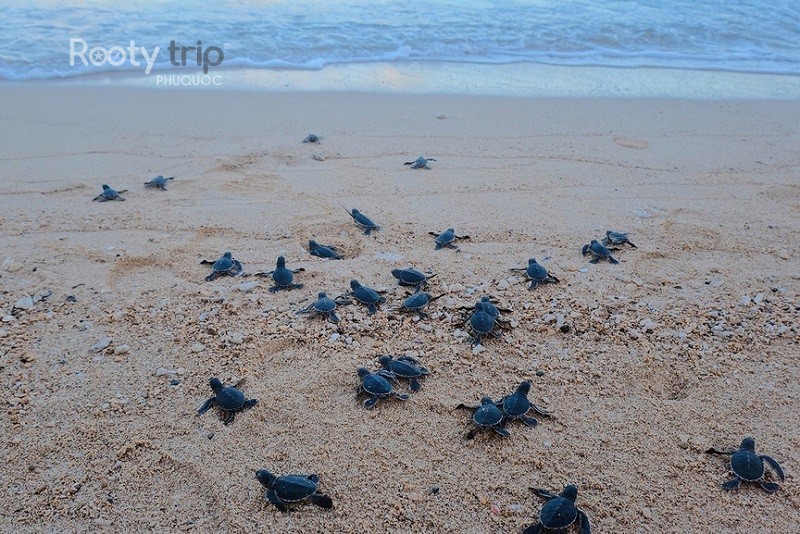
- Spratly Islands (Truong Sa) – some small islands still serve as natural nesting sites.
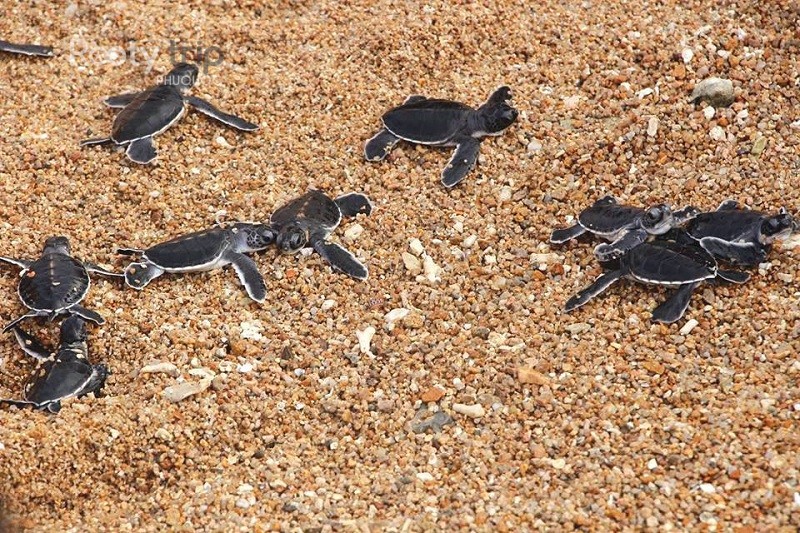
- Nui Chua National Park (Ninh Thuan) – home to seasonal nesting of green and hawksbill turtles.
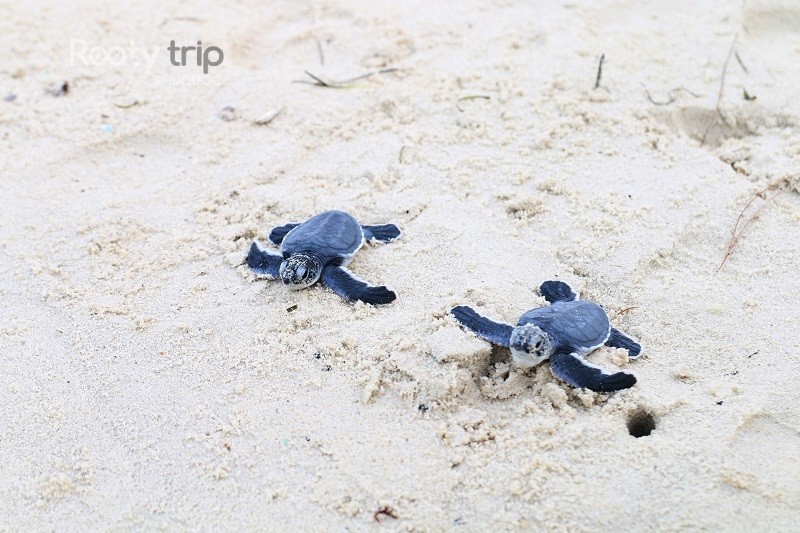
- Cu Lao Cham (Quang Nam) – occasional sightings around coral reefs.
Compared to these locations, Phu Quoc is no longer a stable nesting ground for sea turtles, and only very rare sightings are reported.
Sea Turtles in Phu Quoc – A Fragile Presence
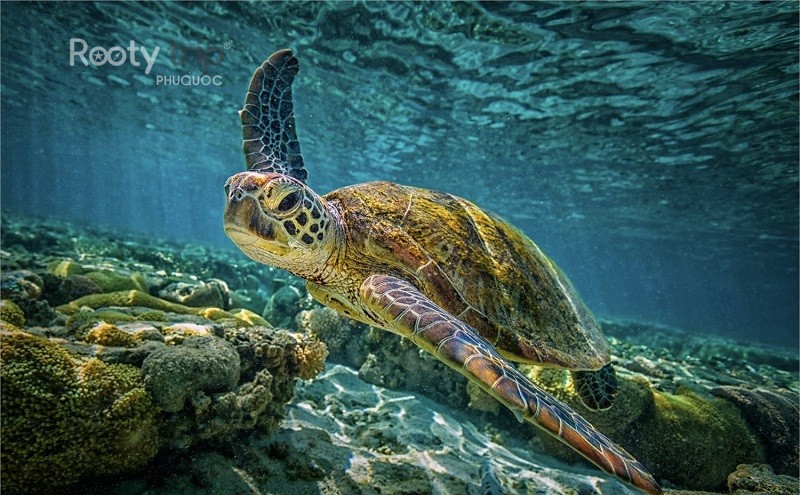
In the past, sea turtles were relatively common around Phu Quoc, especially near small islands and quiet beaches in the southern part of the island. Place names such as Hon Doi Moi and Bien Chuong Vich reflect the long-standing connection between sea turtles and the local marine environment.
However, in recent years, no natural sea turtle nesting sites have been recorded in Phu Quoc. Encountering a sea turtle while diving or snorkeling today is considered extremely rare and meaningful.
The main reasons for this decline include:
- Rapid coastal tourism development
- Marine pollution and plastic waste
- Artificial lighting that disorients hatchlings
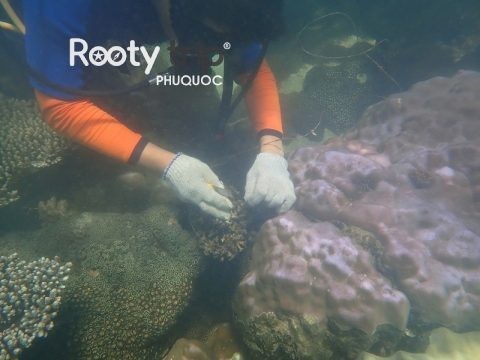
- Degradation of coral reefs and seagrass beds
Despite this, occasional sightings of sea turtles around coral reefs in southern Phu Quoc still offer small but hopeful signs of recovery if conservation efforts continue.
The Role of Sea Turtles in Marine Ecosystems
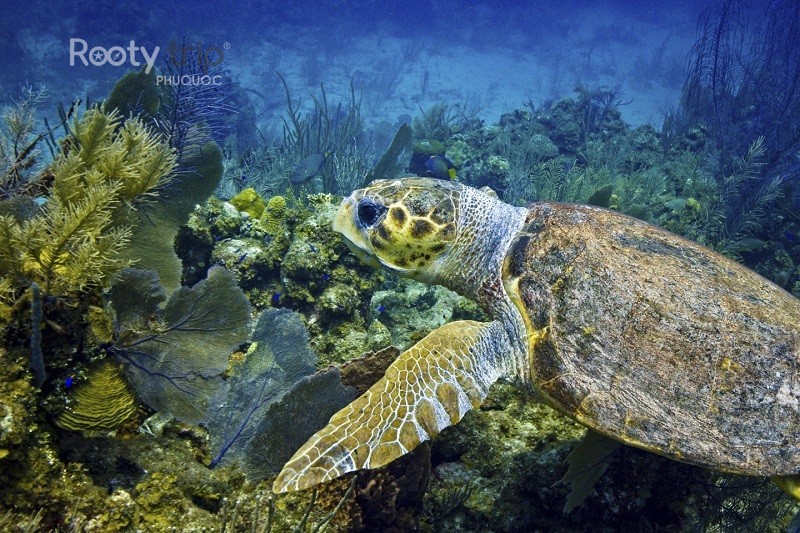
Sea turtles play a crucial role in maintaining marine balance. They help regulate seagrass growth, support healthy coral reefs, and sustain natural food chains. A decline in sea turtle populations often signals broader damage to the marine environment.
Sustainable Tourism – The Key to Protecting Sea Turtles in Phu Quoc
Protecting sea turtles is not only the responsibility of conservation organizations but also requires cooperation from local communities and travelers. Visitors to Phu Quoc can help by:
- Avoiding littering, especially plastic waste
- Not touching, chasing, or feeding sea turtles while snorkeling or diving
- Reducing the use of single-use plastics
- Choosing environmentally responsible tour operators
Sea Turtles – A Message for the Future of Phu Quoc
The fragile presence of sea turtles in Phu Quoc is a powerful reminder of how vulnerable nature can be. Protecting sea turtles means protecting the ocean itself and safeguarding the future of sustainable tourism on the island.
Phu Quoc will only remain truly beautiful when nature is respected and preserved—so that one day, sea turtles may return in greater numbers as an essential part of its blue ocean.