Can Starfish Be Eaten? Safety Facts, Risks, and Toxicity Guide
22/11/2025Starfish are among the most iconic marine creatures in Vietnam, especially in Phu Quoc’s Rach Vem (Phu Quoc) area – often called the “Kingdom of Starfish.” Their vivid colors and gentle appearance make them a favorite subject for beach photography. Yet behind their beauty lies a world of biological mysteries, unique behaviors, and crucial ecological roles that many travelers may not know.
This article provides a comprehensive look at starfish: what they eat, whether they are poisonous, the species found in Vietnam, the dangers they face, and the proper way to photograph them without causing harm.
What type of animal are Starfish? Which phylum do they belong to?
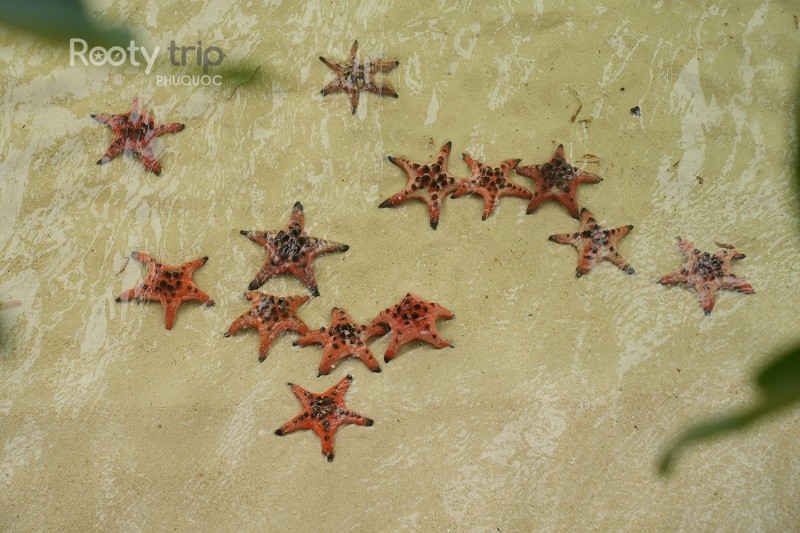
Despite their name, starfish are not fish, nor are they crustaceans. They belong to:
- Phylum Echinodermata, the same group as sea urchins and sea cucumbers
- Their bodies are radially symmetrical, most often with five arms, though some species have 7–20 arms
- Starfish have no brain and no blood, relying instead on a unique water vascular system to circulate nutrients and move
This makes starfish one of the most unusual and fascinating marine animals in the world.
Common Starfish species in Viet Nam
Vietnam is home to several starfish species, each with distinctive shapes and colors. The most common include:
Red Starfish
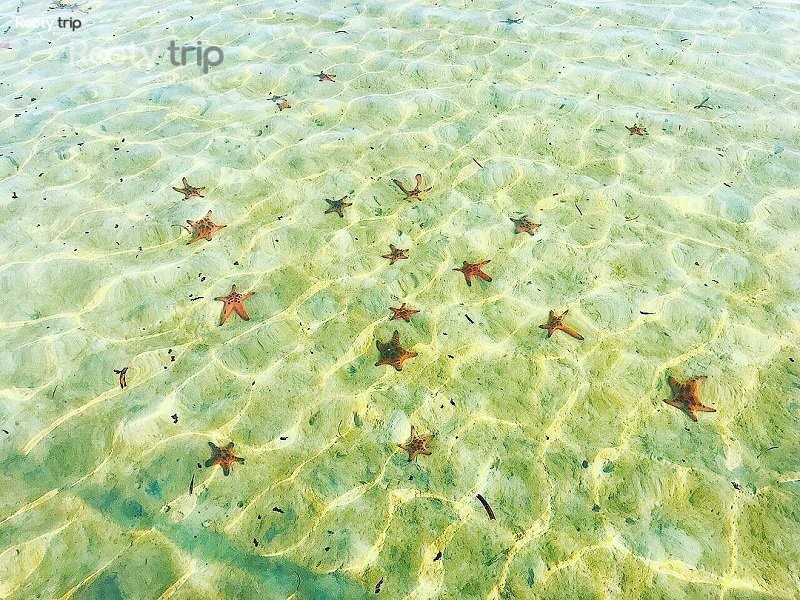
Widely seen in Phu Quoc, especially in Rach Vem. Harmless and highly photogenic.
Blue Starfish
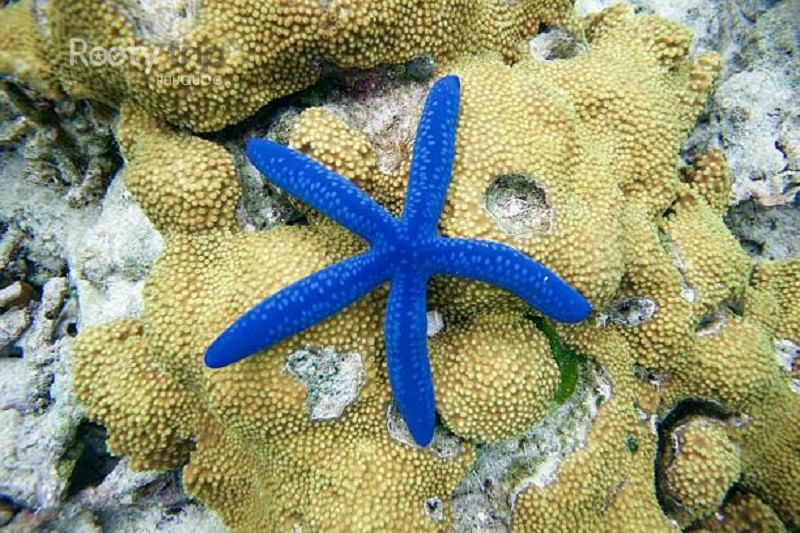
Bright blue in color, found in deeper waters.
Brown Starfish
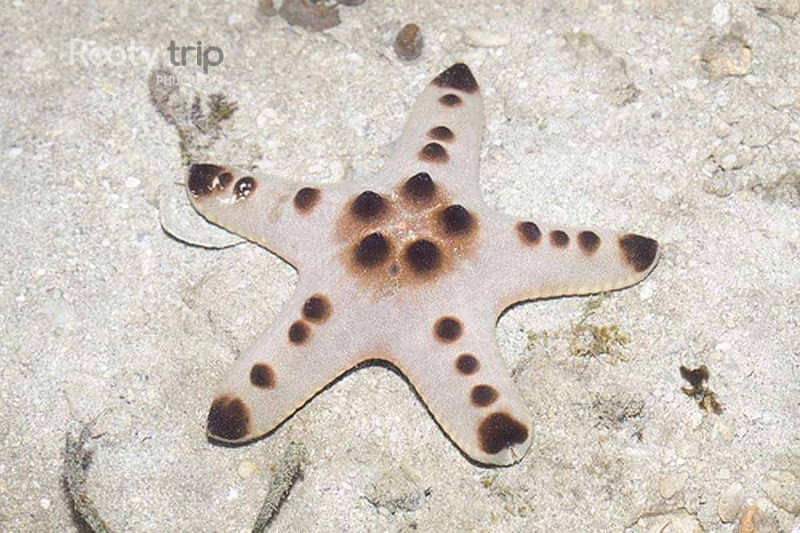
More muted tones, scattered across various coastal regions.
Crown-of-Thorns Starfish
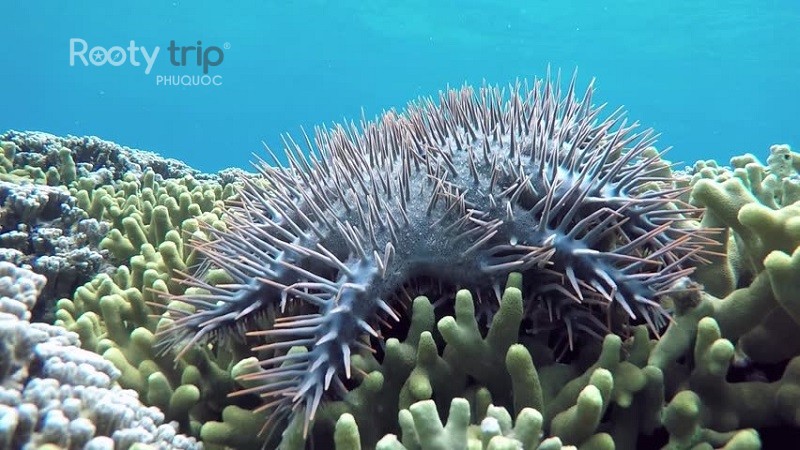
A venomous species with long, sharp spines. Rarely encountered by tourists but harmful to coral reefs.
What do Starfish eat?

Starfish are predators with a remarkable feeding mechanism. Their diet includes:
- Small mollusks (clams, snails, oysters)
- Marine worms
- Small bottom-dwelling organisms
- Organic debris
- Some species feed on coral
One of the most astonishing facts is that starfish digest food externally by extending their stomach out of their body to envelop and break down prey.
Are Starfish poisonous? What risks do they pose?
Most starfish commonly found in Vietnam – including red and blue starfish – are non-poisonous and completely harmless to humans if left in the water.
The exception is the Crown-of-Thorns Starfish, whose spines contain potent toxins that can cause:
- Sharp pain
- Swelling and redness
- Prolonged discomfort
- Inflammation or possible infection
In addition, this species poses a major ecological threat because it consumes coral rapidly, damaging entire reef systems when populations surge.
Are Starfish edible?
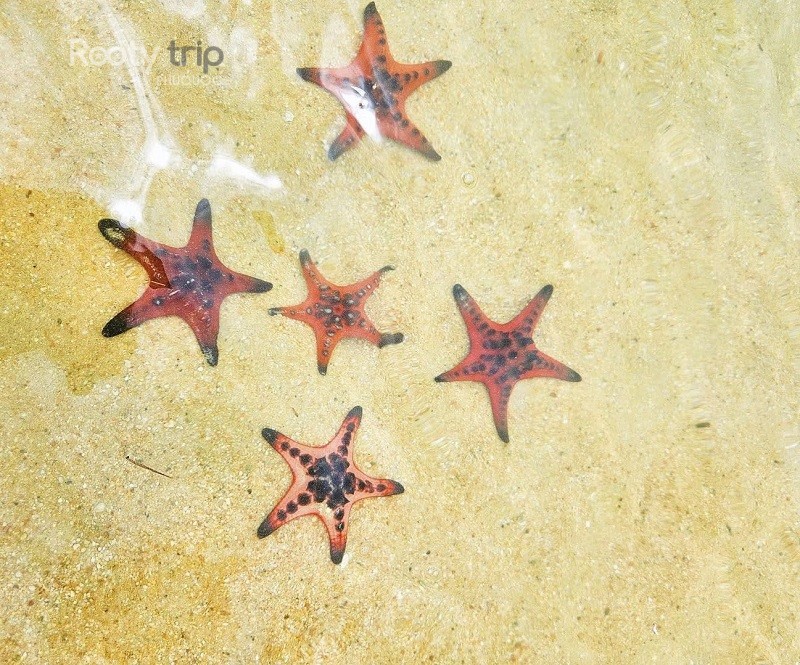
The answer is no.
Starfish are not safe to eat, and experts strongly advise against it:
- They offer little nutritional value
- Some species contain natural toxins
- Harvesting starfish can disrupt local ecosystems
In some regions, dried starfish are used as decorative items, but they are not meant for consumption.
Why you should never lift Starfish out of the water
Starfish breathe through thousands of tiny tube feet located beneath their arms. These structures require continuous contact with seawater to function. When lifted out of the water:
- Starfish lose the ability to breathe
- Their bodies dry out quickly
- They experience thermal shock and salinity shock
- They may die within minutes or hours
This is why handling starfish for photographs can unintentionally kill them.
How to photograph Starfish responsibly in Phu Quoc
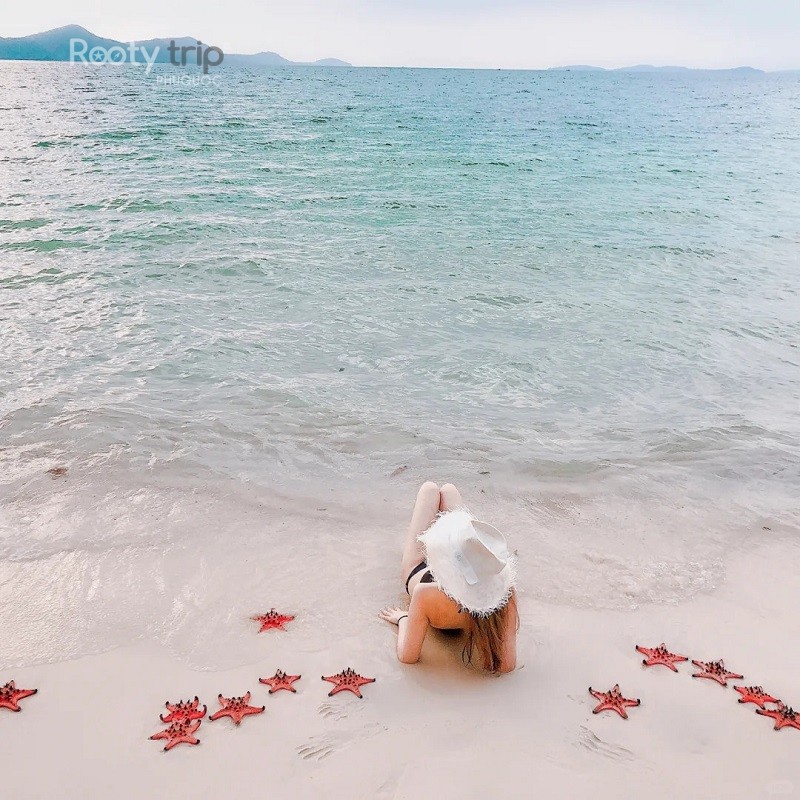
You can admire and photograph starfish while still protecting them. Here are recommended guidelines:
Safe practices
- Take photos with starfish still underwater
- Touch gently without lifting
- Observe from a comfortable distance
Avoid
- Lifting starfish above the water
- Placing them on dry sand
- Arranging them into shapes
- Allowing children to play roughly with them
Responsible tourism helps preserve Phu Quoc’s natural beauty for future generations.
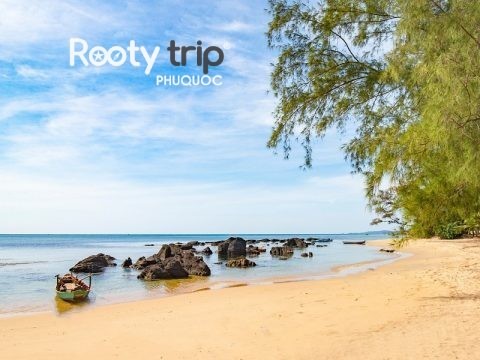
Why Rach Vem has so many Starfish
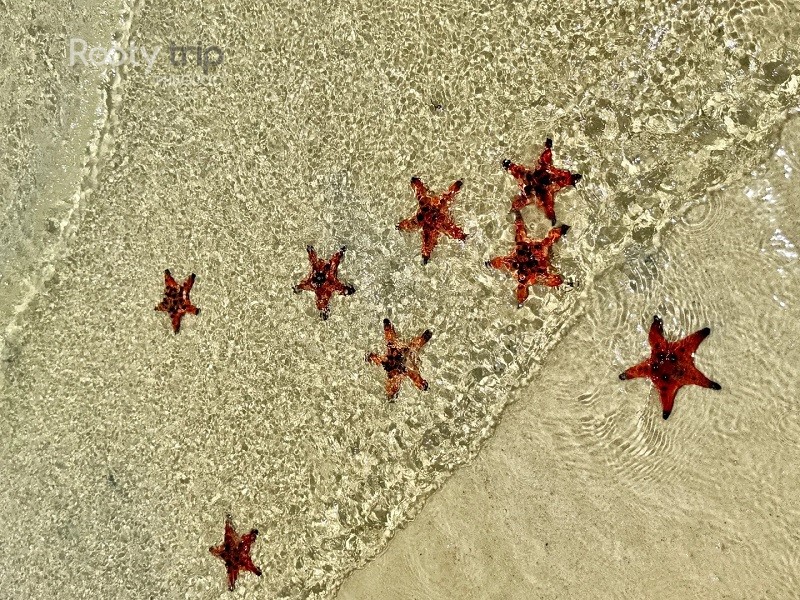
Rach Vem provides ideal conditions for starfish to thrive:
- Clear, shallow waters
- Calm seas with minimal waves
- Soft white-sand seabeds
- Abundant natural food sources
The best time to see starfish in large numbers is from December to May.
Starfish are beautiful, gentle creatures that play an important role in maintaining the balance of marine ecosystems. Understanding their biology, diet, and vulnerabilities helps travelers engage in more responsible tourism-especially when exploring Phu Quoc’s beaches and island tours.
If you plan to visit Rach Vem or join a Phu Quoc island-hopping tour, remember to appreciate starfish without disturbing their natural habitat. Protecting these delicate creatures ensures that the magic of Phu Quoc’s ocean world remains intact for years to come.
Frequently asked questions (FAQ)
What phylum do starfish belong to?
- They belong to the phylum Echinodermata.
Are starfish poisonous?
- Most are harmless. Only the Crown-of-Thorns Starfish is venomous.
What do starfish eat?
- Small mollusks, marine worms, organic debris, and sometimes coral.
Can you eat starfish?
- No-starfish are not safe or suitable for consumption.
Why do starfish die when taken out of water?
- They rely on seawater for respiration through their tube feet.
Can tourists take photos with starfish?
- Yes, as long as the starfish remains underwater.